Her story, in her words
Told as she lived it. This is not a case study and it is not a sales pitch — it is the record of how one writer learned, step by step, what protection actually takes.
Lombardi Street
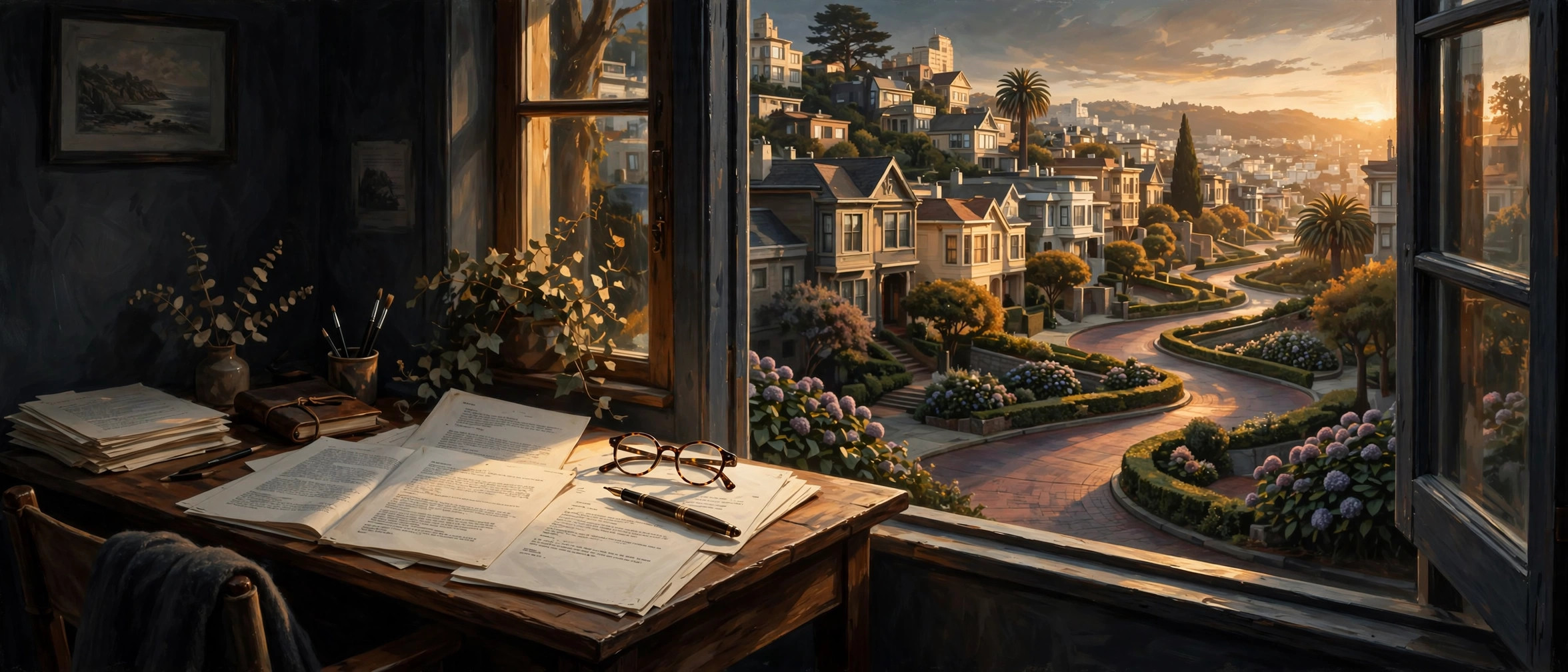
It begins on Lombardi Street, where her screenplay and video game proposals started. Before there were filings, forms, or case files, there was the work itself — stories and game worlds built page by page, including the screenplay that would become the center of everything: Permanence.
Like most writers, she created first and thought about protection after. What happened next taught her why that order matters.
The Writers Guild deposit
Her first move was a deposit with the Writers Guild — putting a dated copy of the work on record, so there would be independent proof of what she had written and when she had written it.
She would learn exactly what that deposit is and what it is not. A Guild deposit is a dated record. It is not a copyright — and confusing the two is one of the most common and costly mistakes a writer can make. It was step one, not the finish line.
The U.S. Copyright Office
So she went further — to real registration. She prepared and filed her application with the U.S. Copyright Office herself, for her unpublished works, and in December 2021 the Copyright Office confirmed receipt of her application and her payment.
No promoter. No middleman. The writer, the work, and the federal record.
“The missing title is Permanence.”
Then came the moment this entire service is built on. Reviewing her own filing, she caught something wrong: one of the titles she had uploaded was missing from her claim. A title left off the claim is a work left unprotected — and nobody was going to catch it for her.
So she caught it herself. She wrote to the Copyright Office directly, named the missing title — Permanence — and the Copyright Office attached her correction to her application for the registration specialist. Her claim was made whole because the writer checked her own paperwork, line by line.
“The missing title is Permanence.”
— Her own words to the U.S. Copyright Office, correcting her claim

Then she saw it on screen
After the filings came the part no writer prepares for. In her account, she later saw her story up on screen — in Free Guy, and in several other series and movies — carrying symbols she recognizes from her own screenplay and video game proposals. The worlds she had built on Lombardi Street, she says, were looking back at her from productions she had never sold them to.
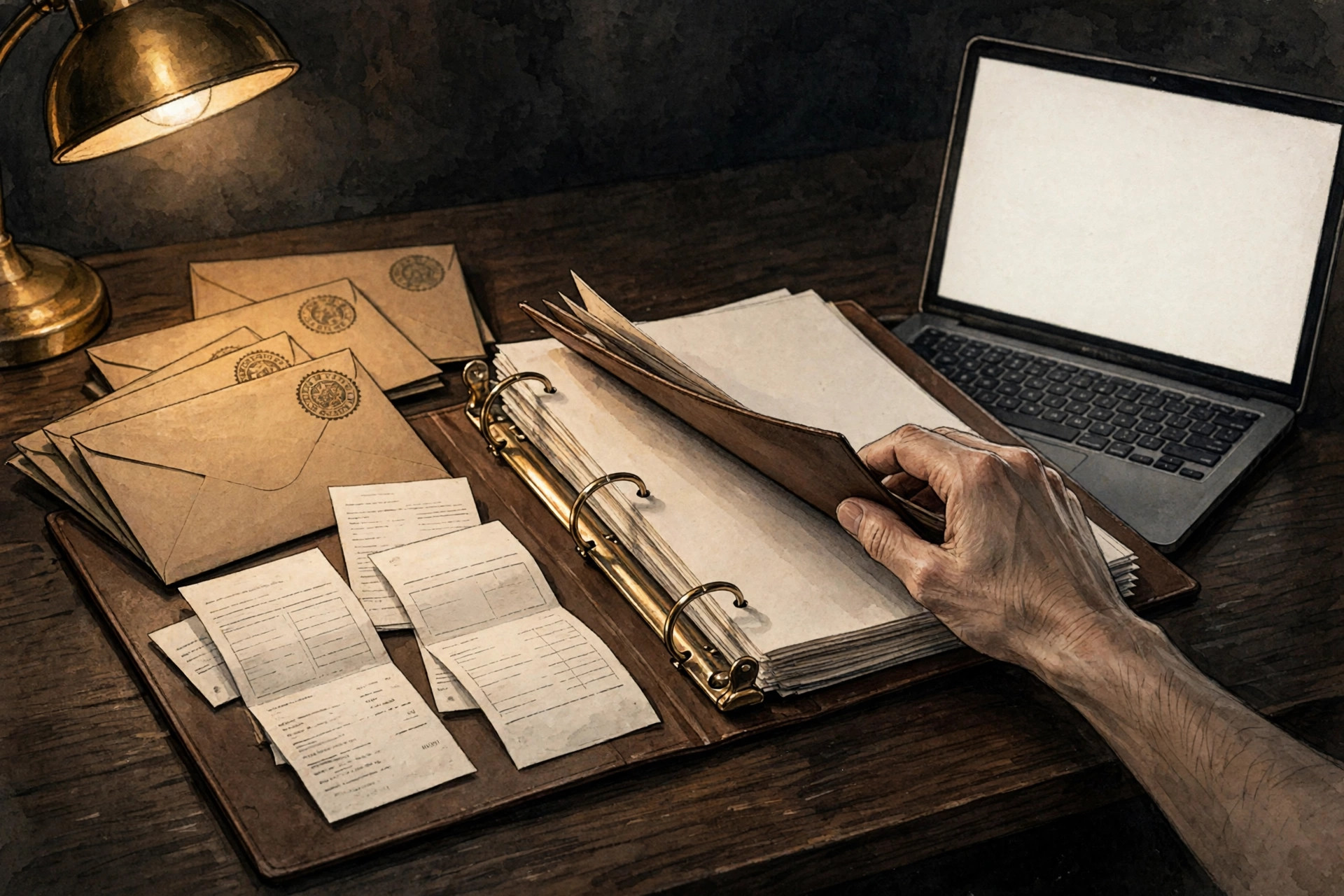
She did not just watch. She built her own litigation evidence file: a legal brief, a demand letter, a motion for a preliminary injunction, and side-by-side exhibit binders comparing Free Guy against Permanence — her records, assembled by her own hand, the same way she had filed her copyright.
No court has ruled on her claims, and this page does not pretend otherwise. What is certain is the fight itself — and what it proved to her: the writers who fare best are the ones whose paperwork was right before anyone ever asked to see it.
Protection did not stop there
Alongside the Guild deposit and the Copyright Office registration, she also protects her works through SongSecure, keeping another dated record of what she creates. Layer on layer — because she learned that one record is good, and a trail of records is better.
That is the whole philosophy of this service, in one sentence: protect your work the way she wished someone had protected hers — early, correctly, and with every title accounted for.